In the early years of the War, Newport (then in Monmouthshire) became one of the principal embarkation ports for soldiers on their way to France and beyond. Members of a large Assembly in the town set up a work to minister to the men as they waited to leave. They rented a shop unit in the centre of town which was converted into what they called the "Soldiers' Rest". Here they could sit and talk, drink tea, write letters and be cared for by Christians.
Stephen Olford and his parents had settled in the town, living in the Missionary Home run by the Assembly. His tremendous evangelistic talents were being encouraged and developed by John Capper, and his work with the troops was very fruitful. In 1942 a number of families left the local Assembly to form a new and more open fellowship in a school in a different part of the town, and this eventually became known as Nant Coch (Welsh for "red stream") after the name of the house in which the school was operating.
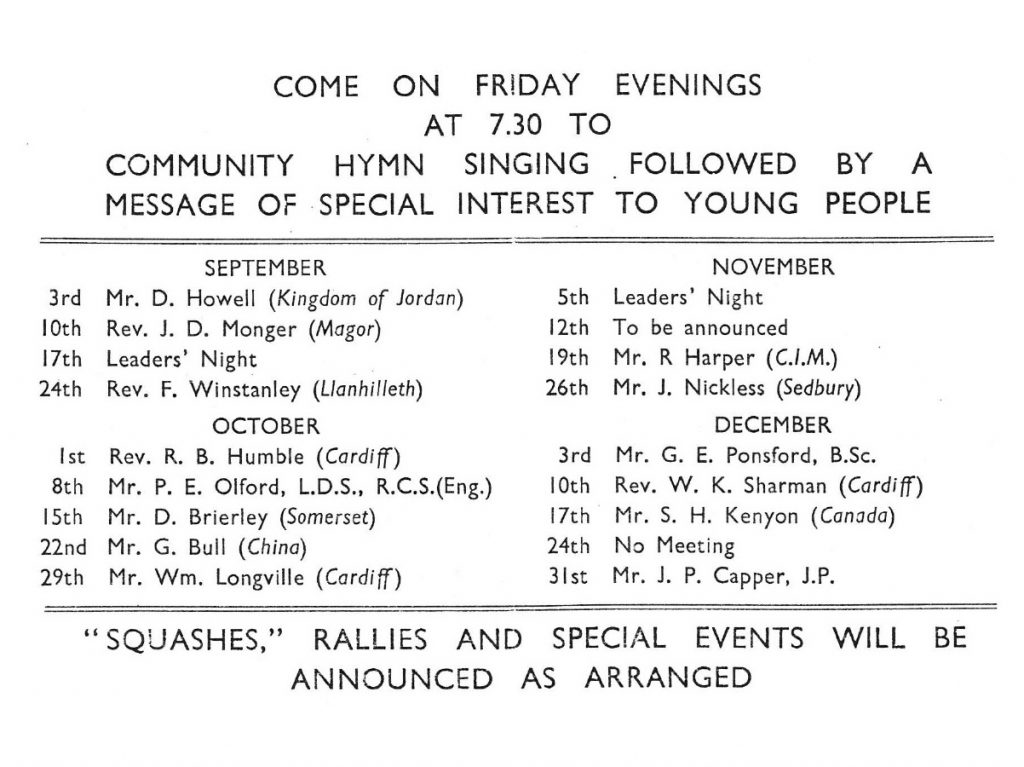
Through the work with the soldiers and the formation of a Young People's Fellowship, they soon began to make an impact on the town, and another school was rented for Sunday evening services. These were timed to coincide with the ending of the majority of Sunday evening services so that many from various denominations came. The programme was lively, and the emphasis was on evangelism. All this was quite revolutionary. Stephen Olford functioned for some time in a semi-official capacity as "pastor” of this new and outward-looking fellowship. He went on to become pastor of Duke Street Baptist Church, Richmond and then to Calvary Baptist Church in New York from where he had a worldwide evangelistic and teaching ministry. This has been well documented in his biography "Only one Life" written by John Phillips, former assistant director of Moody Correspondence School and Emmaus Correspondence School. John also had strong connections with Nant Coch as his parents lived at the missionary home in Newport.
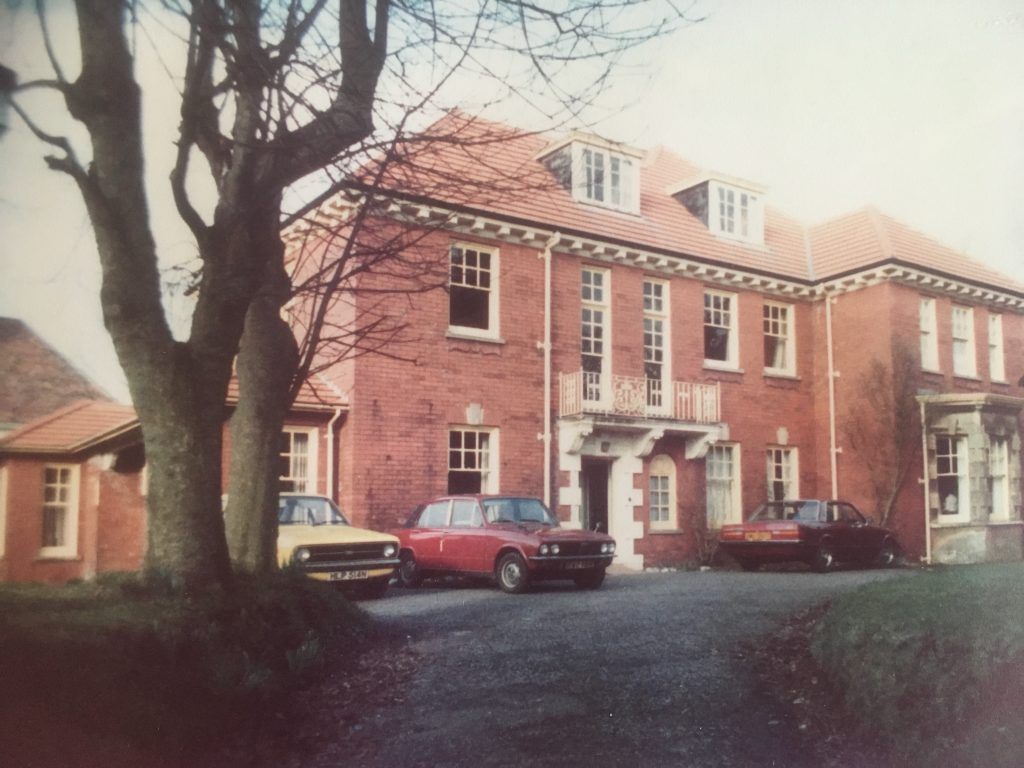
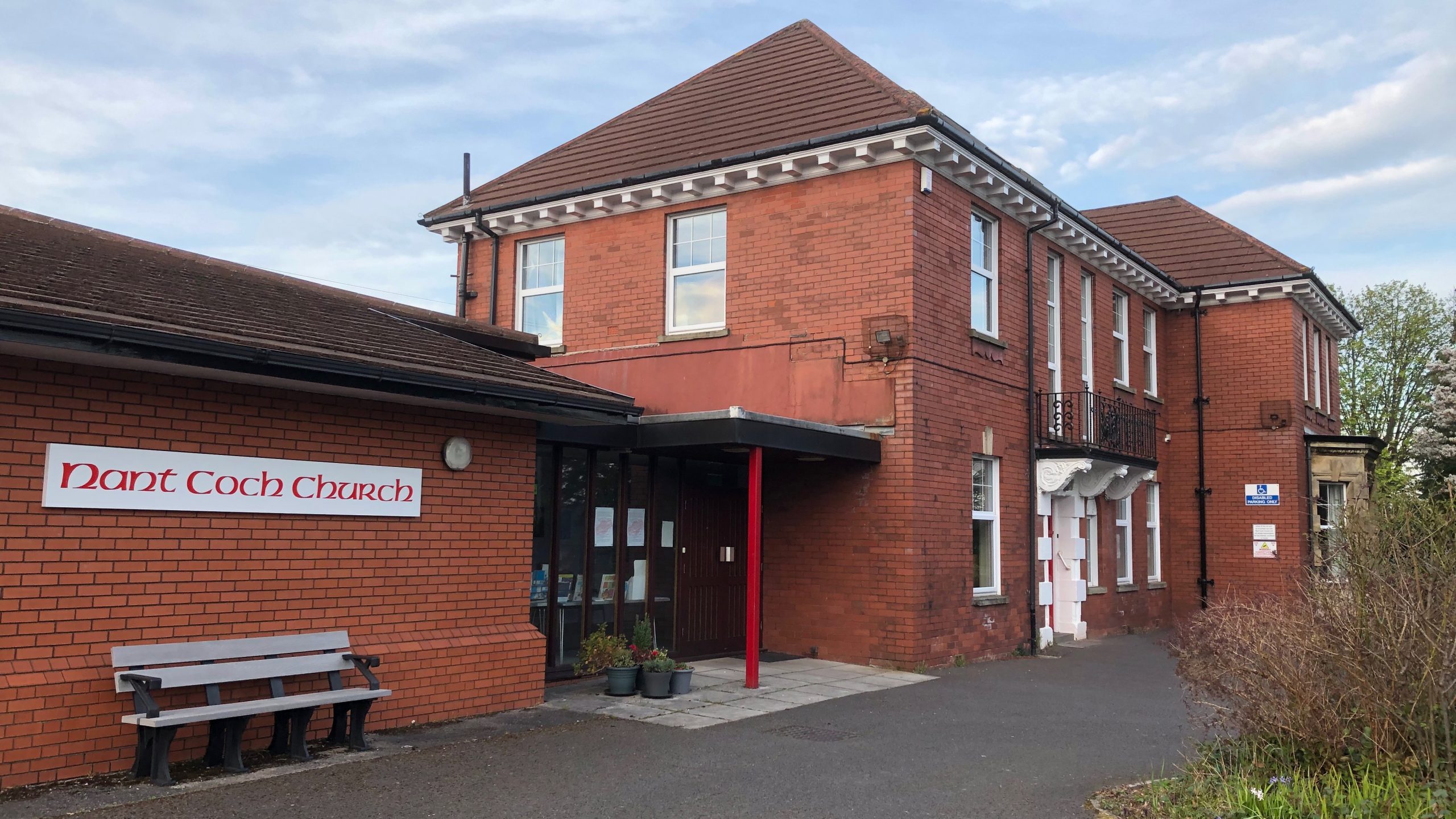
In the early 1950's the Church, now meeting in a room in a private house, started to search for a permanent home. A large house in the same area as Nant Coch House was considered and eventually purchased for £1800. Since that time, there have been many changes. The service in the town centre school continued with great blessing until around 1970 when it was moved to the Nant Coch Church building and became their evening service.
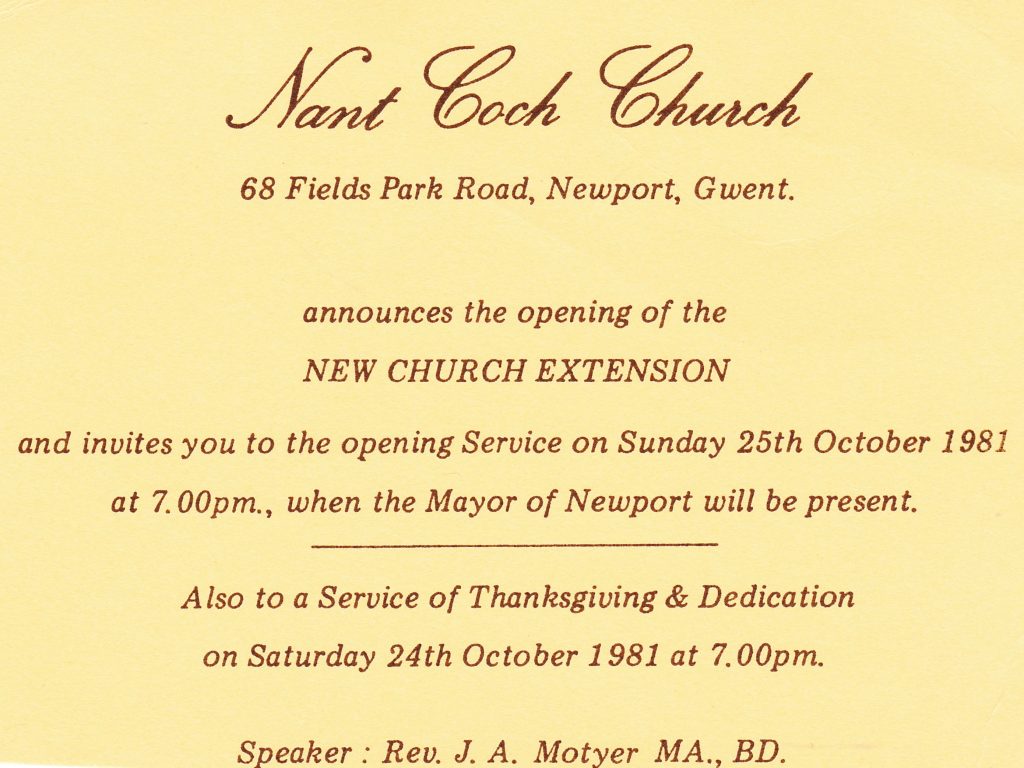
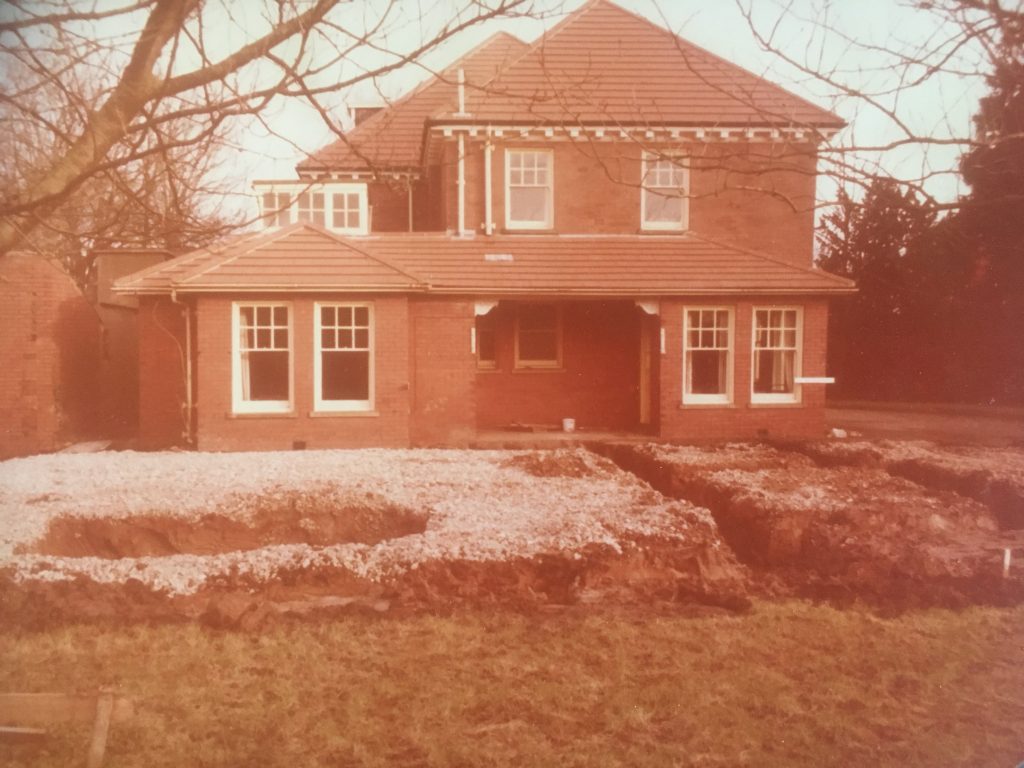
In 1981, the meeting room accommodation was proving to be much too small and a large hall was built onto the garden. This was a great time of growth for the Church. Situated in the centre of a community with many children and young people, there was much interest in Sunday School and Youth Work as well as the Bible Studies and Ladies Bible Study Group.
In 19??, a large kitchen was built adjoining the annexe to the main hall,
Present
Since this major building programme, a number of further projects have been undertaken and at the present time there are plans well in hand to create a large room for our young people's group and enlarge the kitchen and bring other facilities into line with modern health, safety and hygiene regulations.
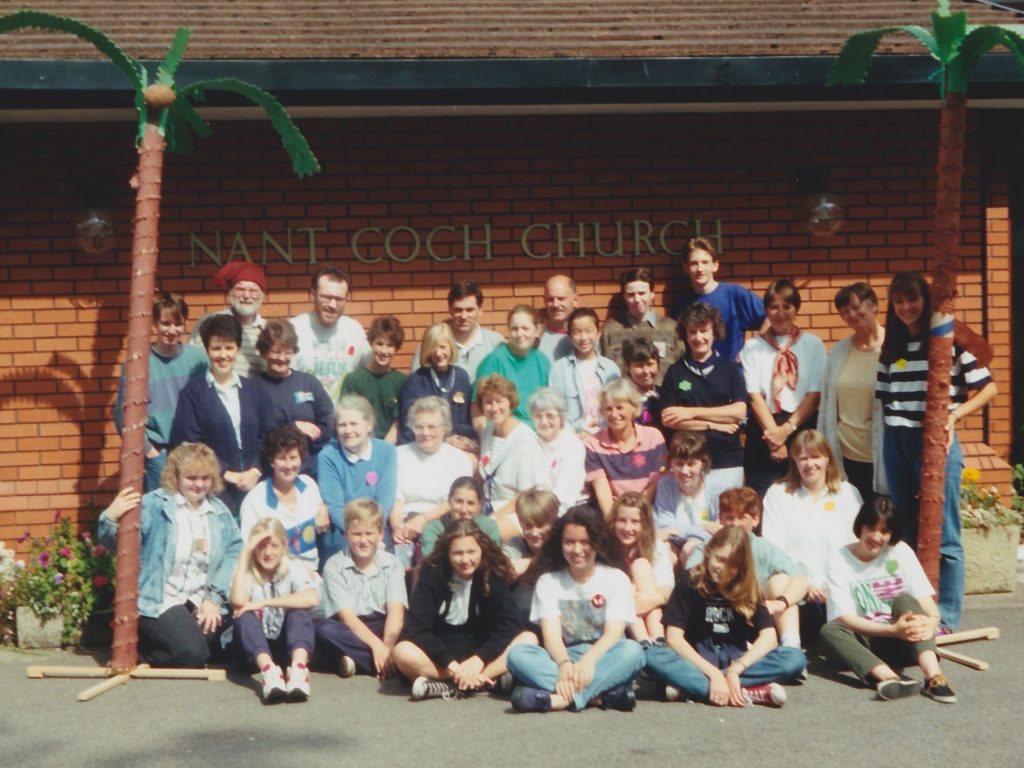
As far as numbers go, we have approximately 160 committed members but there is an enormous fringe. We have about three different congregations – Sunday morning, Sunday evening and at the Family Service held on the first Sunday of each month – some people only coming to one of those services. Until very recently we have had a paid part-time youth worker and that has been a great success. She has now returned to Romania where she was working for two years prior to her year at Nant Coch. She has now been replaced with a full-time Youth Worker who is already making a most valuable contribution to that area of the Church's work.
As far as the leadership is concerned, there are six elders and until recently, 4 deacons. However the Church is in the process of re-structuring the leadership and looking at gifting within the Church.